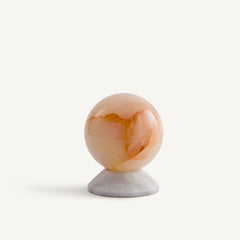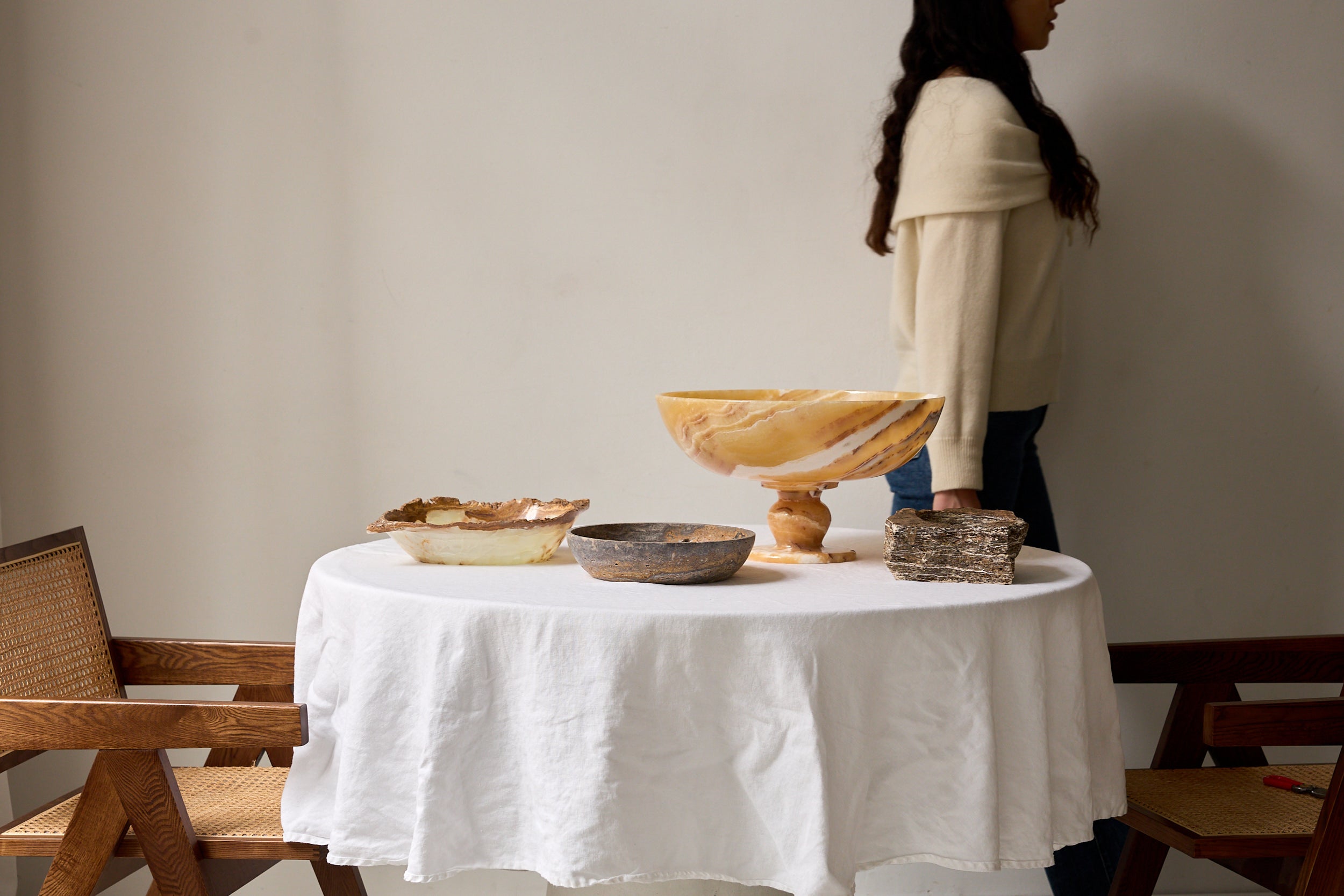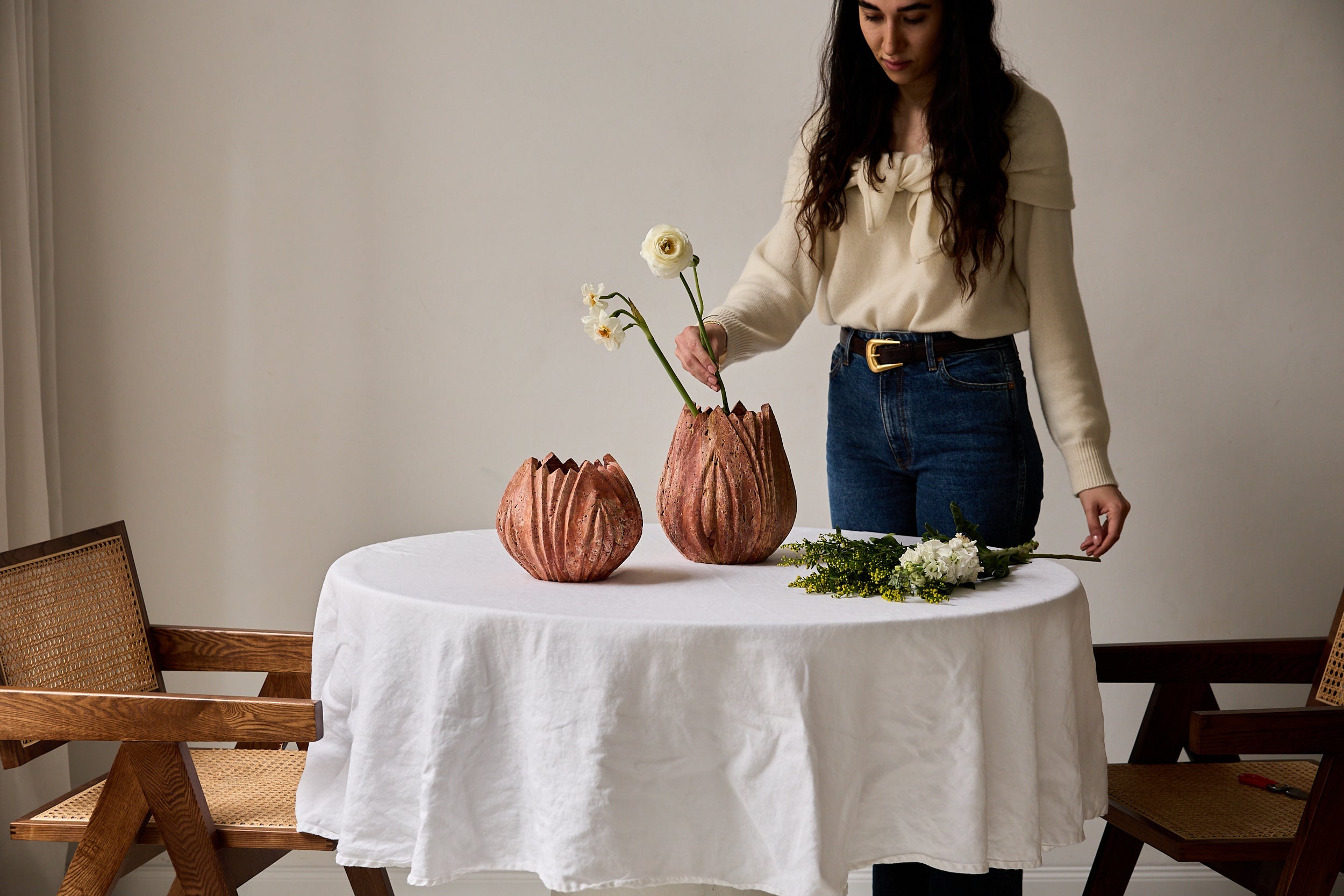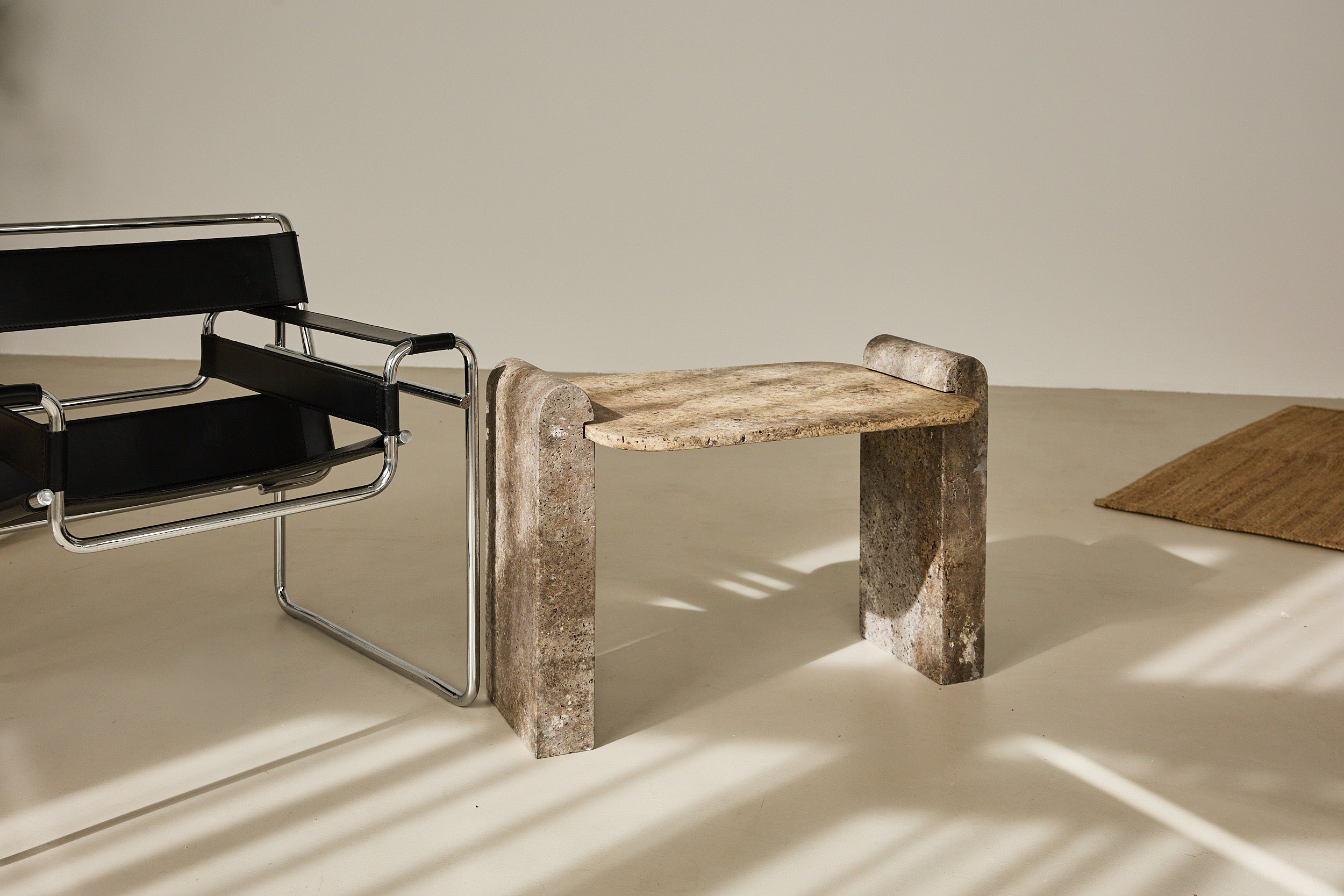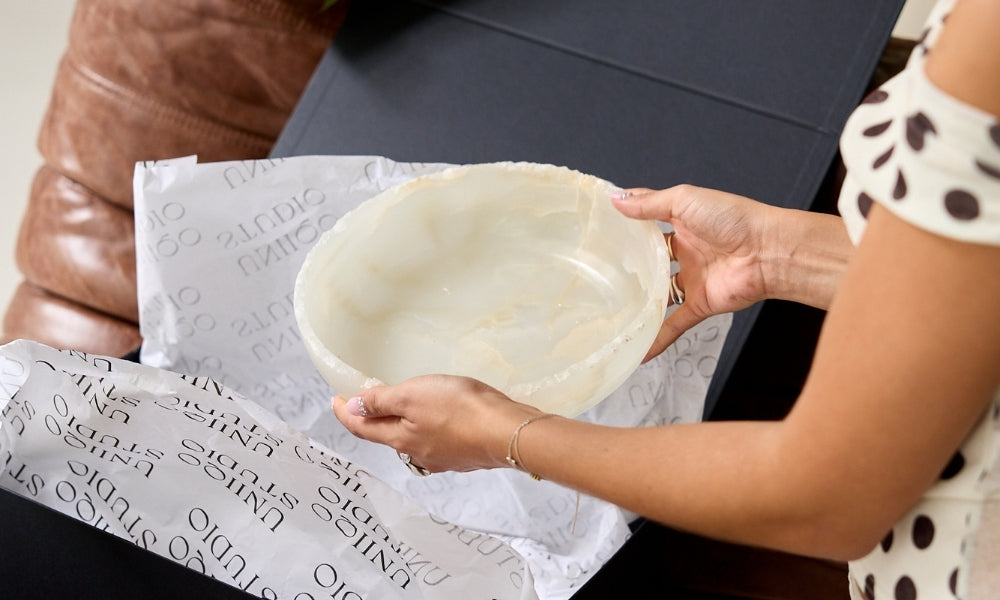
Drei Steine. Drei unterschiedliche Beziehungen zur Welt. In diesem Guide findest du alles, was du wissen musst, damit dein Stück lange schön bleibt und mit der Zeit vielleicht sogar noch mehr Charakter entwickelt.

Pflegeanleitung für Onyx
Onyx ist der seltenste Stein in unserer Kollektion. Er ist ein gebändertes Mineral, das über Millionen von Jahren in Hohlräumen vulkanischen Gesteins entstanden ist. Dort lagerte sich silikatreiches Wasser Schicht für Schicht ab und formte die kristalline Struktur, die Onyx seine außergewöhnliche Transluzenz verleiht. Im Gegenlicht beginnt Onyx zu leuchten. Je nach Umgebung, Tageszeit und Lichteinfall verändert er seine Farbe und Tiefe. Von allen Natursteinen ist Onyx vielleicht der ausdrucksstärkste.
Onyx ist nicht zerbrechlich, möchte aber mit Sorgfalt behandelt werden. Er ist härter als Marmor, seine geschichtete Struktur macht ihn jedoch empfindlicher gegenüber plötzlichen Stößen, harten Schlägen oder schnellen Temperaturwechseln. Seine Oberfläche ist weniger porös als Marmor, trotzdem können Flecken entstehen, wenn farbige Flüssigkeiten, Öle oder aggressive Substanzen länger darauf stehen bleiben. Auch starke Säuren sollten vermieden werden, da sie die Oberfläche mit der Zeit angreifen können.
Das macht Onyx nicht schwierig in der Pflege. Es bedeutet nur, dass der Stein als das behandelt werden sollte, was er ist: ein seltenes Naturmaterial. Sanft gereinigt, vor plötzlicher Kraft geschützt und offen für Licht, Umgebung und Gebrauch.
„Jedes Onyx-Stück ist ein Zeugnis vulkanischer Geologie. Die Bänderung, die du siehst, entstand über Millionen von Jahren, als silikatreiches Wasser Schicht für Schicht in Gesteinshohlräumen ablagerte. Keine zwei Stücke können jemals gleich sein.“

01 - Regelmäßig trocken abstauben Onyx benötigt weniger Reinigung als porösere Steine. Für die wöchentliche Pflege reicht meist ein weiches, trockenes Mikrofasertuch, um Staub sanft von der Oberfläche zu entfernen.
02 - Sparsam feucht abwischen Bei leichten Rückständen oder kleinen Flecken genügt ein kaum feuchtes Tuch. Wringe das Tuch gut aus, bevor es mit dem Stein in Kontakt kommt. Stehendes Wasser sollte niemals auf Onyx zurückbleiben.
03 - Sofort und vollständig trocknen Nach jedem Kontakt mit Feuchtigkeit solltest du die Oberfläche direkt mit einem sauberen, weichen Tuch trocknen. Feuchtigkeit sollte nie auf Onyx stehen bleiben, da Mineralrückstände aus dem Wasser die Oberfläche mit der Zeit trüben können.
Wichtig: Verwende auf Onyx keine Sprühreiniger, Glasreiniger oder klassischen Allzweckreiniger. Auch Produkte, die als steingeeignet beworben werden, können Tenside oder Alkohole enthalten, die die Politur mit der Zeit angreifen.

- Tun: Vor direkter Sonne schützen | Längere UV-Strahlung kann bei bestimmten Onyx-Varianten, besonders bei warmen Bernstein- und Honigtönen, zu Farbveränderungen führen. Indirektes Licht und Umgebungslicht sind ideal.
- Vermeiden: Wärmequellen | Halte Onyx fern von Heizkörpern, direktem Sonnenlicht durch Glas und Kerzen, die Wärme direkt an die Steinoberfläche abgeben. Wärmeschock ist eine der häufigsten Ursachen für Risse in Onyx.
- Tun: Heben, nicht schieben | Wenn du ein Onyx-Stück umstellen möchtest, hebe es immer an. Besonders die Kanten an der Basis können empfindlich reagieren. Durch Schieben entsteht seitlicher Druck genau an diesen Stellen.
- Vermeiden: Direkten Kerzenkontakt | Bei unseren Kerzenhaltern sollte die Kerze immer gut in die Öffnung passen, ohne die Steinwände zu berühren. Konzentrierte Wärme direkt an der Steinwand kann zu Rissen führen.
- Vermeiden: Stoßgefährdete Flächen | Platziere Onyx nicht dort, wo Gegenstände darauf fallen könnten, und halte ihn von Kanten fern. Im Gegensatz zu Marmor kann Onyx eher splittern als glatt brechen.
Unsere Onyx-Kollektion


Cassara Schale


Leontis Vase


Corvessa Schale


Azuralis Beistelltisch


Azuralis Konsole


Velorum Schale

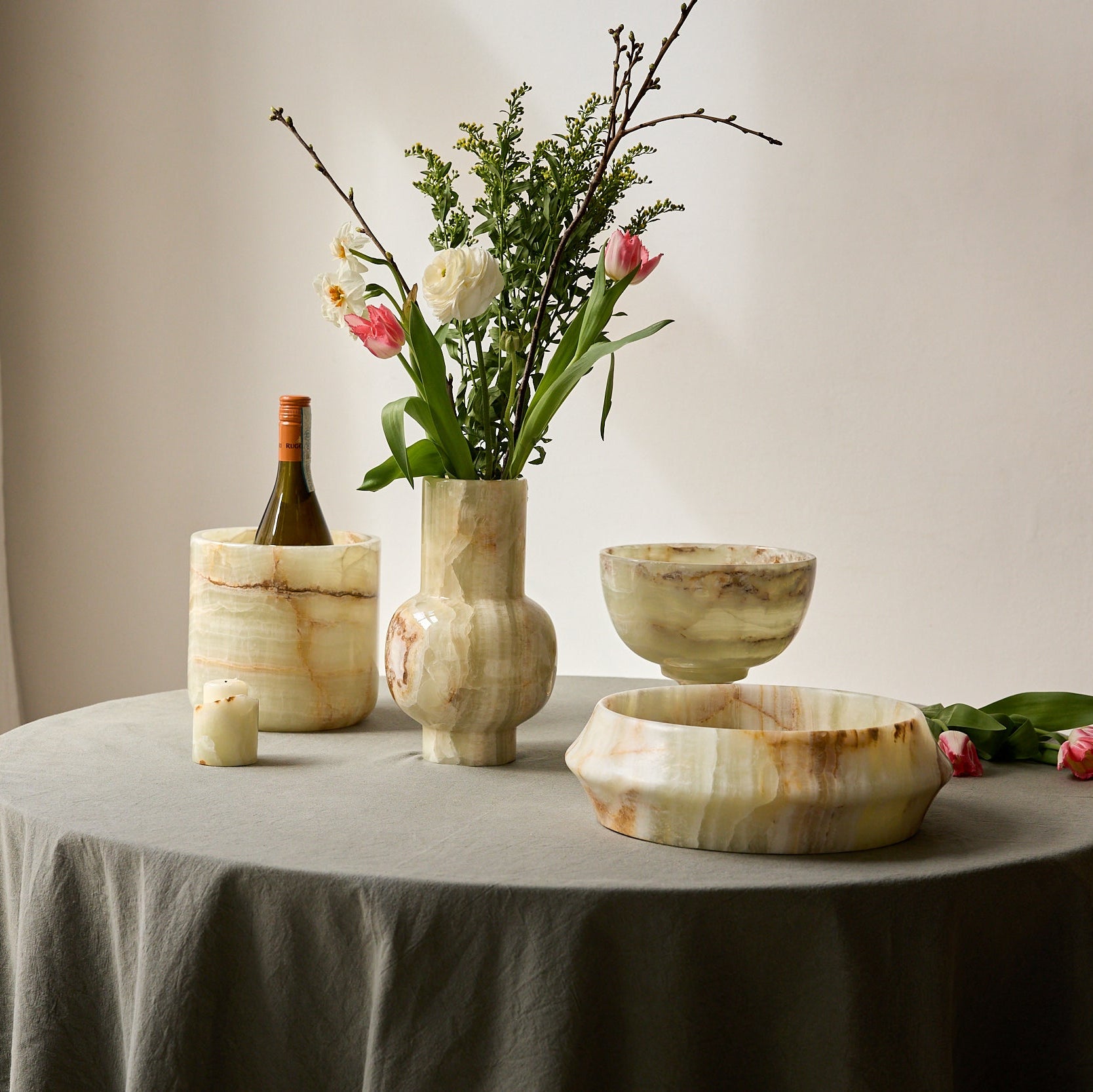
Ophira Schale


Etrusca Schale


Pflegeanleitung für Marmor
Marmor ist ein metamorphes Gestein: Kalkstein, der durch enormen Druck und Hitze über lange Zeit verwandelt wurde. Aus diesem Material entstanden einige der berühmtesten Bauwerke der Welt, und auch dein Uniiqo-Stück trägt diese besondere Geschichte in sich.
Marmor besteht hauptsächlich aus Kalziumkarbonat. Dadurch reagiert er auf Säuren, auch auf milde Säuren in Wein, Zitrusfrüchten, Essig oder manchen Reinigungsmitteln. Seine Oberfläche ist auf mikroskopischer Ebene porös. Flüssigkeiten, die längere Zeit darauf verbleiben, können daher in den Stein eindringen. Die Maserung, die du an Marmor liebst, entstand durch Mineralien, die über lange Zeit in den Stein gelangten. Über ähnliche feine Wege können auch Flecken entstehen, wenn der Stein nicht richtig gepflegt wird. Das macht Marmor nicht kompliziert. Es macht ihn empfindsam.
„Marmor altert nicht, er erinnert sich. Die Patina eines viel geliebten Stückes erzählt seine Geschichte ebenso deutlich wie jede Zeichnung im Stein selbst.“

Bei Marmor bewirkt eine kleine, regelmäßige Pflege mehr als jede gelegentliche Grundreinigung. Diese Gewohnheiten helfen deinem Stück, lange so gepflegt auszusehen wie am Tag seiner Ankunft.
01 - Täglich abwischen, wöchentlich abstauben
Ein kurzes Abwischen mit einem trockenen Mikrofasertuch nach der Nutzung verhindert, dass sich Staub und Rückstände auf der Oberfläche festsetzen. Einmal pro Woche kannst du dein Stück gründlicher entstauben, auch in Vertiefungen oder an geschnitzten Details.
02 - Filzgleiter und Untersetzer regelmäßig kontrollieren
Prüfe alle paar Monate die Filzgleiter unter deinen Objekten. Sie können sich mit der Zeit verformen oder verrutschen. Ersetze abgenutzte Gleiter und stelle Dekorationsobjekte gelegentlich um, damit die Oberfläche gleichmäßig altert.
03 - Flecken am selben Tag behandeln
Kleine Wasserränder oder Fingerabdrücke lassen sich am einfachsten entfernen, wenn du sie noch am selben Tag behandelst. Ein leicht feuchtes Tuch, gefolgt von einem trockenen Tuch, reicht oft schon aus, bevor sich Rückstände festsetzen können.
04 - Einmal im Monat gründlich reinigen
Reinige die gesamte Oberfläche einmal im Monat mit etwas pH-neutraler Seife, verdünnt in Wasser. Danach immer vollständig trocknen. Das ist auch ein guter Moment, um nach neuen Ätzungen, Kratzern oder Stellen zu schauen, die etwas mehr Aufmerksamkeit brauchen.

- Tun: Untersetzer und Filzgleiter verwenden | Lege Untersetzer unter Gläser, Kerzen und Vasen. Verwende Filzgleiter an der Unterseite von Objekten, die auf Marmor stehen.
- Vermeiden: Saure Flüssigkeiten | Wein, Zitronensaft, Essig, Kaffee und tomatenbasierte Saucen können die Oberfläche ätzen, wenn sie darauf stehen bleiben. Tupfe Verschüttetes sofort ab, statt es zu verwischen.
- Vermeiden: Bleichmittel und Ammoniak | Vermeide Allzweckreiniger, Bleichmittel, ammoniakhaltige Sprays und Scheuerpads. Sie können die Versiegelung entfernen und den Glanz dauerhaft abstumpfen.
- Tun: Verschüttetes sofort abtupfen | Wenn etwas auf Marmor gelangt, lege direkt ein Tuch darauf und drücke es sanft an. Bei Flecken ist Zeit entscheidend. Die meisten entstehen nicht durch die Substanz allein, sondern dadurch, dass sie zu lange auf der Oberfläche bleibt.
- Vermeiden: Objekte über den Stein ziehen | Ziehe niemals Gegenstände über Marmor. Selbst glatte Unterseiten können Kratzer verursachen, wenn sich kleine Schmutzpartikel zwischen Objekt und Stein befinden.
Unsere Marmor-Kollektion


Virello Vase


Seraphi Schale


Nero Vittoria Vase


Venus Figurine


Noir Equus Skulptur


Nerone Schale


Corolla Schale


Venus Figurine


Caelmar Schale


Aurelia Teller

Pflegeanleitung für Travertin
Travertin entsteht an heißen Quellen und in Kalksteinhöhlen – ein Sedimentgestein, das über Jahrtausende Schicht für Schicht aufgebaut wurde, während Kohlendioxid aus dem abkühlenden Wasser entwich und die charakteristischen Poren hinterließ, die seine Oberfläche prägen. Diese Poren sind keine Unvollkommenheiten. Sie sind die Signatur des Steins, und zu verstehen, wie man mit ihnen statt gegen sie arbeitet, ist der Kern der Travertinpflege.
Travertin ist poröser als Marmor oder Onyx. Unversiegelt nimmt er Flüssigkeiten schnell auf, und einmal entstandene Flecken lassen sich nur schwer wieder entfernen. Wie Marmor besteht er aus Calciumcarbonat, das bei Kontakt mit Säuren wie Wein, Saft, Kaffee oder Essig reagiert – die Reaktion ist sichtbar und bleibt dauerhaft, wenn sie nicht rasch behandelt wird. All das macht Travertin jedoch nicht anspruchsvoll in der Pflege. Er altert lediglich sichtbarer als andere Steine, und viele unserer Kunden betrachten die zunehmende Wärme seiner Töne im Laufe der Zeit als Vorzug, nicht als Makel.
„Travertin wurde für das Kolosseum verwendet, 100.000 Kubikmeter davon. Was überlebt hat, tut dies nicht trotz seiner Porosität, sondern zum Teil wegen ihr. Der Stein atmet. Er reagiert auf seine Umgebung. Er überdauert fast alles, was gemacht wurde, um ihn zu ersetzen."

01 - Mit einem weichen trockenen Tuch abstauben | Die strukturierte Oberfläche von Travertin kann Staub in ihren natürlichen Poren sammeln. Verwende ein weiches, trockenes Tuch oder eine Naturfaserbürste, um Staub sanft von der Oberfläche und aus Vertiefungen zu entfernen.
02 - Mit pH-neutralem Steinreiniger reinigen | Für eine gründlichere Reinigung eignet sich ein spezieller Steinreiniger, verdünnt in Wasser. Trage ihn mit einem weichen Tuch sanft auf. Als einfache Lösung für zu Hause kannst du auch etwas pH-neutrales Spülmittel in warmem Wasser verwenden.
03 - Abspülen und vollständig trocknen | Wische nach der Reinigung mit einem sauberen, feuchten Tuch nach, um Seifenrückstände zu entfernen. Trockne den Stein anschließend gründlich. Stehendes Wasser in den Poren kann mit der Zeit Mineralablagerungen hinterlassen.
04 - Verschüttetes unverzüglich abtupfen | Da Travertin sehr porös ist, ist schnelles Handeln besonders wichtig. Lege sofort ein sauberes Tuch auf die Flüssigkeit und drücke es sanft an. Nicht wischen, da sich die Flüssigkeit sonst in mehr Poren verteilt. Danach feucht reinigen und gründlich trocknen.

- Tun: Stark genutzte Travertinflächen schützen | Travertin ist von Natur aus porös. Größere oder häufig genutzte Flächen wie Tische können daher von einer Versiegelung alle sechs Monate profitieren. Bei dekorativen Objekten ist eine Versiegelung bei normaler Nutzung im Innenbereich meist nicht notwendig. Falls du dein Stück versiegeln möchtest, verwende eine imprägnierende Steinversiegelung und keine oberflächliche Beschichtung..
- Vermeiden: Reiniger mit Essig oder Zitrone | Viele natürliche Reinigungsprodukte enthalten Zitronensäure oder Essig. Beide können Travertin sofort ätzen. Prüfe deshalb immer die Inhaltsstoffe, bevor du ein Produkt auf Naturstein verwendest.
- Tun: Schutzunterlagen verwenden | Filzgleiter, Untersetzer und Schutzmatten sind besonders wichtig. Das gilt vor allem für Metallobjekte, die auf unversiegeltem Travertin Rostflecken hinterlassen können.
- Vermeiden: Scheuernde Reinigungspads | Verwende niemals Stahlwolle, Scheuerschwämme oder Scheuerpulver. Travertin kann zerkratzen, und die natürliche Textur seiner Poren lässt sich nach einer Beschädigung nicht einfach wiederherstellen.
- Tun: Die Textur annehmen | Die offenen Poren gehören zum natürlichen Charakter von Travertin. Der Versuch, sie mit Haushaltsprodukten zu füllen, richtet oft mehr Schaden an, als sie einfach so zu lassen, wie sie sind.
- Vermeiden: Längerer Wasserkontakt | Travertin-Stücke sollten nicht in Wasser stehen und nicht als Blumentöpfe ohne wasserdichte Einlage verwendet werden. Anhaltende Feuchtigkeit kann Mineralflecken verursachen und die Oberfläche mit der Zeit beeinträchtigen.
Unsere Travertin-Kollektion


Vellora Schale


Ravelle Kerzenhalter


Caldera Vase


Gaia Schale


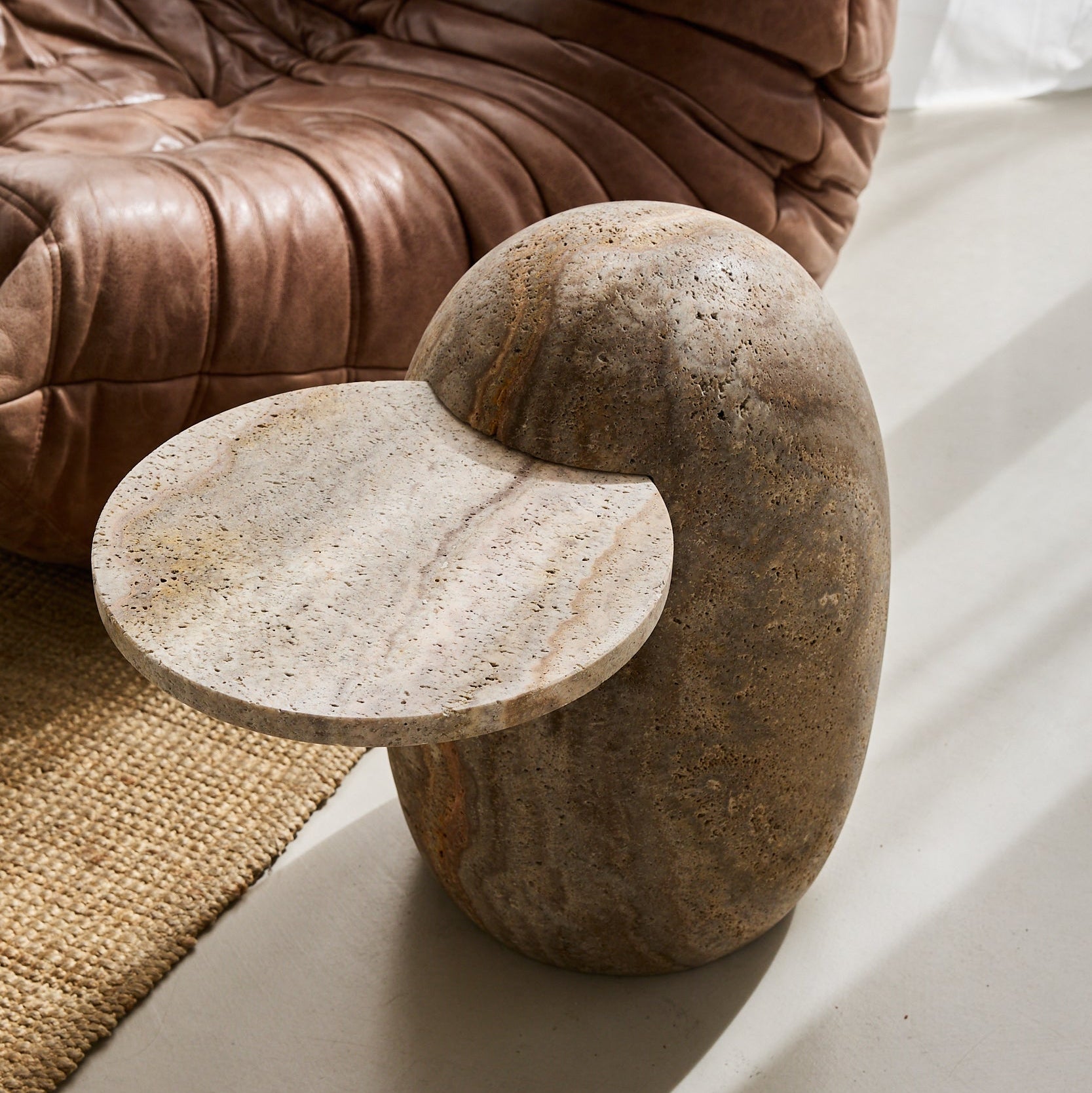

Tarello Beistelltisch


Olenzo Tablett
Häufige Fragen zu Onyx-Stücken
Wie bleibt mein Onyx-Stück schön glänzend?
Wie bleibt mein Onyx-Stück schön glänzend?
Onyx bringt seine Leuchtkraft von Natur aus mit. Mit ein wenig liebevoller Pflege bleiben Tiefe und Glanz lange erhalten. Wische die Oberfläche einfach mit einem weichen, leicht feuchten Tuch ab und trockne sie direkt danach vollständig. Verzichte auf Scheuerpads, säurehaltige Produkte und stehendes Wasser. Für die dekorative Nutzung reicht das vollkommen aus.
Auf meiner Onyx-Oberfläche ist ein Ringabdruck von einem Glas zu sehen. Bekomme ich den weg?
Auf meiner Onyx-Oberfläche ist ein Ringabdruck von einem Glas zu sehen. Bekomme ich den weg?
Wenn der Ring durch verdunstetes Wasser entstanden ist, hilft meist ein leicht feuchtes Tuch mit anschließendem Trockenreiben. Mineralablagerungen lassen sich oft mit etwas Geduld entfernen.
Fühlt sich die Stelle leicht rau an, könnte es sich um eine kleine Ätzung durch ein mild säurehaltiges Getränk handeln. Leichte Ätzungen lassen sich manchmal mit einer feinen Poliermasse ausgleichen. Bei tieferen Stellen empfehlen wir, eine Fachperson für Steinrestauration hinzuzuziehen.
Die Bernsteinmaserung sieht bei unterschiedlichem Licht ganz anders aus. Ist das normal?
Die Bernsteinmaserung sieht bei unterschiedlichem Licht ganz anders aus. Ist das normal?
Ja, absolut. Das ist sogar eine der schönsten Eigenschaften von Onyx. Der Stein ist transluzent, das heißt, seine Farbe verändert sich je nach Lichteinfall, Temperatur und Helligkeit. Genau das macht Onyx so besonders.
Meine Onyx-Schale hat einen feinen Haarriss. Kann man das reparieren?
Meine Onyx-Schale hat einen feinen Haarriss. Kann man das reparieren?
Haarrisse lassen sich durch eine professionelle Steinrestauration manchmal stabilisieren und optisch verbessern. Ganz unsichtbar werden sie allerdings meist nicht. Melde dich in so einem Fall gerne direkt bei uns unter hello@uniiqostudio.com. Wir schauen uns dein Stück an und beraten dich individuell.
Häufige Fragen zu Marmor-Stücken
Mein Marmor hat eine matte, raue Stelle, weil etwas Säurehaltiges darauf stand. Kann ich das beheben?
Mein Marmor hat eine matte, raue Stelle, weil etwas Säurehaltiges darauf stand. Kann ich das beheben?
Das nennt man Ätzung. Dabei handelt es sich um eine kleine chemische Reaktion, die die polierte Oberfläche an dieser Stelle angreift. Leichte Ätzungen lassen sich mit Marmorpolierpulver, zum Beispiel Zinnoxid, und einem weichen Tuch oft gut ausgleichen. Bei stärkeren Stellen empfehlen wir eine professionelle Steinrestauration.
Ein Fleck geht mit Seife und Wasser einfach nicht weg. Was kann ich tun?
Ein Fleck geht mit Seife und Wasser einfach nicht weg. Was kann ich tun?
Du kannst es mit einem sogenannten Poultice versuchen. Dafür rührst du Backpulver mit Wasser zu einer dicken Paste an, trägst sie auf den Fleck auf, deckst sie mit Frischhaltefolie ab und lässt sie 24 bis 48 Stunden einwirken. Während die Paste trocknet, kann sie den Fleck aus dem Stein ziehen. Bei öligen Flecken kannst du statt Wasser Aceton verwenden.
Mein Marmor hat mit der Zeit eine schöne Patina entwickelt. Sollte ich versuchen, sie zu entfernen?
Mein Marmor hat mit der Zeit eine schöne Patina entwickelt. Sollte ich versuchen, sie zu entfernen?
Das ist ganz dir überlassen. Viele unserer Kundinnen und Kunden lieben genau diese gelebte Optik, weil sie zeigt, dass das Stück Teil des Alltags geworden ist. Wenn du dir lieber wieder den ursprünglichen Glanz wünschst, kann eine professionelle Steinrestauration die Oberfläche oft nahezu in den Originalzustand zurückversetzen.
Kann ich meine Marmorschale für Lebensmittel verwenden?
Kann ich meine Marmorschale für Lebensmittel verwenden?
Unsere Marmor-Stücke sind als dekorative Objekte gedacht und nicht für direkten Lebensmittelkontakt vorgesehen, da die verwendete Oberflächenpflege nicht lebensmittelecht ist. Am schönsten wirkt die Schale als Präsentationsstück. Speisen kannst du zum Beispiel auf einem separaten Teller oder mit einer passenden Einlage darin servieren.
Häufige Fragen zu Travertin-Stücken
Mein Travertin-Tablett hat einen dunklen Fleck, der sich nicht entfernen lässt. Was hilft hier?
Mein Travertin-Tablett hat einen dunklen Fleck, der sich nicht entfernen lässt. Was hilft hier?
Dunkle Flecken auf Travertin sind häufig ölbasiert. Mische dafür Backpulver mit Aceton zu einer dicken Paste, trage sie großzügig auf den Fleck auf, decke sie mit Frischhaltefolie ab und lass sie 24 bis 48 Stunden einwirken. Während die Paste trocknet, kann sie das Öl aus den Poren ziehen. Bei Bedarf kannst du den Vorgang wiederholen.
Bei wasserbasierten Flecken funktioniert die gleiche Methode mit Wasser statt Aceton.
Verändert sich die Oberfläche meines Travertin-Stücks mit der Zeit?
Verändert sich die Oberfläche meines Travertin-Stücks mit der Zeit?
Ja, das gehört zu Travertin dazu. Als Naturstein entwickelt er mit der Zeit feine Gebrauchsspuren, die seinen eigenen Charakter unterstreichen. Mit etwas liebevoller Pflege bleibt dein Stück über viele Jahre wunderschön.
Die Poren in meinem Stück scheinen Staub zu sammeln und dunkler zu werden. Sollte ich sie auffüllen?
Die Poren in meinem Stück scheinen Staub zu sammeln und dunkler zu werden. Sollte ich sie auffüllen?
Am besten reinigst du die Poren mit einer weichen Bürste und etwas Steinreiniger in kleinen, kreisenden Bewegungen. So lassen sich Ablagerungen gut lösen.
Von Hausmitteln zum Auffüllen raten wir eher ab, da sie sich mit der Zeit verfärben oder schrumpfen können. Wenn du die Poren professionell auffüllen lassen möchtest, kann eine Steinwerkstatt dafür farblich abgestimmtes Füllmaterial verwenden.
Mein Travertin-Stück hat einen orangenen Rostfleck, weil ein Metallgegenstand darauf stand. Wie bekomme ich ihn weg?
Mein Travertin-Stück hat einen orangenen Rostfleck, weil ein Metallgegenstand darauf stand. Wie bekomme ich ihn weg?
Das ist Eisenoxidation, also Rost, der vom Metall in den porösen Stein übergegangen ist. Dafür braucht es ein spezielles rostlösendes Poultice. Sogenannte „Iron-Out“-Produkte sind im Steinpflege-Fachhandel erhältlich. Am besten stellst du Metallgegenstände künftig nicht direkt auf unversiegelten Travertin.